

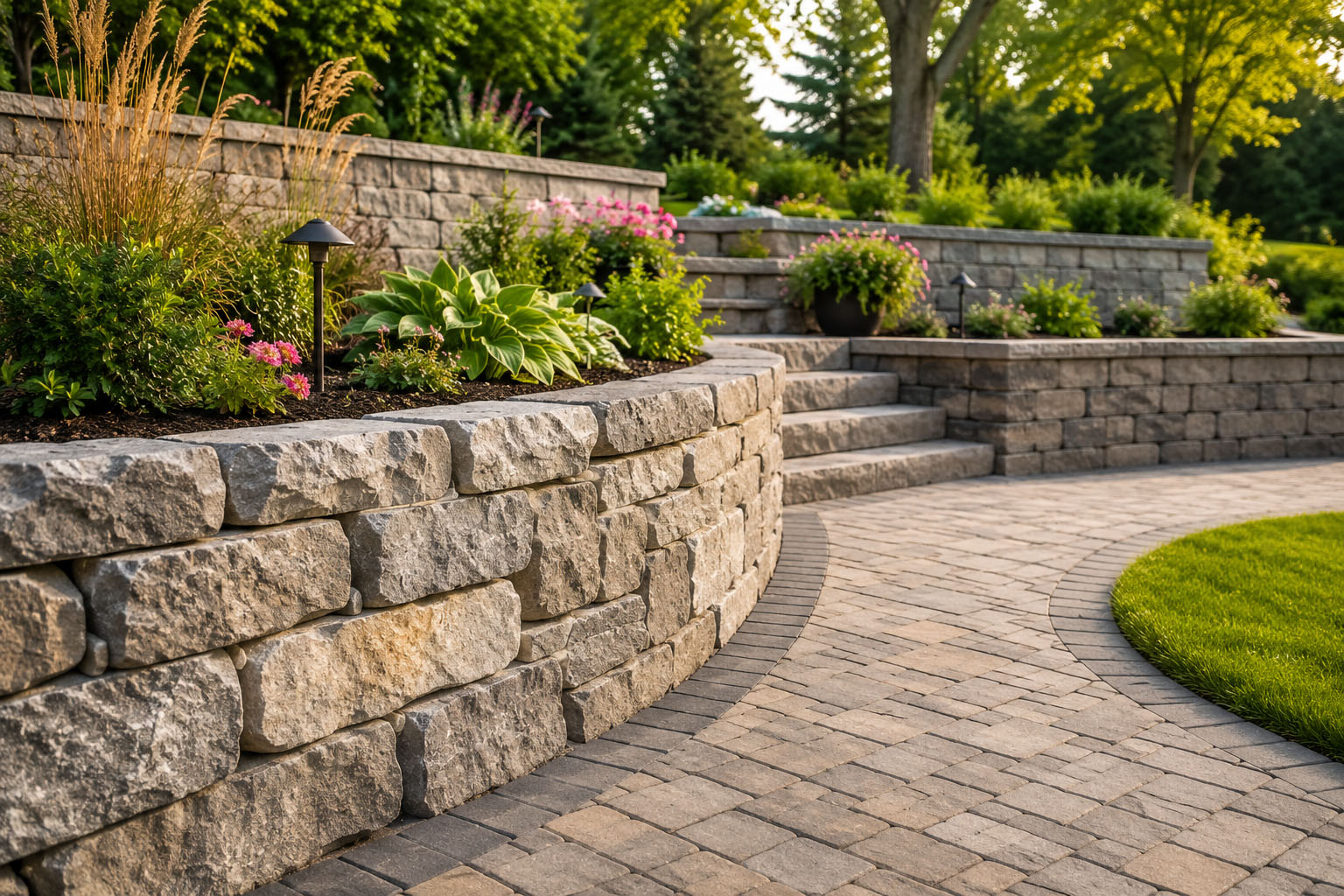
A retaining wall does more than hold back soil. It adds a vertical element to your landscape, defines your patios, walkways, and garden beds, and can even double as extra seating when guests come over. But before any of that happens, you have to make one of the biggest decisions of the project: should your retaining wall be built with natural stone or concrete pavers?
Both materials can produce a wall that lasts for decades in the Chicago area. The right choice comes down to how you weigh three factors: durability, appearance, and price. This guide compares natural stone and paver retaining walls across all three so you can decide which material fits your property, your style, and your budget.
What is the difference between natural stone and paver retaining walls?
Natural stone retaining walls are built with stone slabs quarried from rock formations, while paver retaining walls are built with manufactured concrete wall blocks designed to interlock. Natural stone offers organic, one-of-a-kind character, and pavers offer uniform sizing, engineered strength, and a wider range of budget options.
Natural stone options include granite, limestone, bluestone, and sandstone. Each slab is unique because it was formed by nature, so no two natural stone walls look exactly alike. The stone can be cut into clean, squared slabs for a more tailored look or left rough for a rustic aesthetic.
Concrete wall pavers, like those from Unilock and Rochester, are manufactured to precise dimensions. The blocks fit and lock together in a way that creates a sturdy, stable structure. Because they are engineered products, pavers come in consistent shapes, sizes, colors, and textures, and many are designed to mimic the look of natural stone or classic brick.
Which retaining wall material is more durable: natural stone or pavers?
Both natural stone and concrete pavers are highly durable retaining wall materials that can last for decades, but they handle wear differently. Natural stone resists chips, cracks, and fading, while interlocking pavers are engineered to withstand freeze-thaw cycles and shifting soil.
Durability matters more in the Chicago suburbs than in most parts of the country. Our winters put retaining walls through repeated freeze-thaw cycles, where moisture in and around the wall freezes, expands, and thaws again. A poorly built wall from either material will heave, lean, or crumble under those conditions.
Here is how each material holds up:
- Natural stone durability: Granite and other dense stones are among the hardest building materials available. They resist chipping, cracking, and fading, and they are unaffected by UV exposure. Softer stones like sandstone and limestone are still durable but can be more porous, which means they benefit from seal coating to keep out moisture.
- Paver durability: Concrete wall blocks are manufactured for strength and consistency. The interlocking design distributes pressure across the wall, which helps the structure flex slightly with soil movement instead of cracking the way a solid poured concrete wall would. If a single paver becomes damaged, it can be replaced without rebuilding the wall.
With either material, the durability of your retaining wall depends heavily on the installation. A proper base, adequate drainage behind the wall, and correct engineering for the wall’s height matter more than the material itself. This is why professional installation is recommended for retaining walls, especially walls that hold back significant soil.
Which looks better: natural stone or paver retaining walls?
Natural stone retaining walls have an organic, one-of-a-kind appearance that pavers cannot fully replicate, while paver retaining walls offer a clean, uniform look with more color and style options. The better choice depends on the aesthetic you want for your outdoor living space.
- The case for natural stone: Because every slab comes from a real rock formation, natural stone walls have variation in color, veining, and texture that manufactured products can only imitate. Bluestone and limestone bring cooler, softer tones, while granite and sandstone can add bolder color. Natural stone tends to complement homes with traditional architecture, wooded lots, and landscapes designed around a natural look.
- The case for pavers: Wall pavers are available in a wide selection of styles, from classic brick looks to sleek, modern designs with smooth faces and crisp lines. Their uniform sizing makes it easier to build tight curves, incorporate pillars, and match your retaining wall to an existing paver patio, walkway, or driveway. If your other hardscape features were built with Unilock pavers, a Unilock wall system can tie the whole space together.
One more design consideration: features like seat walls, columns, steps, and built-in lighting are typically easier to integrate with a paver wall system because the components are designed to work together. Natural stone can incorporate these features too, but the work is more custom.
A 3D color rendering of your project can take much of the guesswork out of this decision. Seeing both materials rendered in your actual landscape makes it much easier to commit to one.
Are natural stone retaining walls more expensive than paver walls?
Natural stone retaining walls generally cost more than paver retaining walls because of material and labor costs, though certain types of natural stone are more affordable than others. Paver walls typically offer the lower overall project cost, especially for larger walls.
Several factors drive the price difference:
- Material cost: Quarried stone has to be cut, transported, and often imported, which raises the price per square foot. Concrete wall blocks are manufactured regionally and cost less to produce. That said, natural stone pricing varies widely by type. Some varieties are surprisingly cost-effective, while premium granite slabs sit at the top of the price range.
- Labor: Paver wall systems are engineered to stack and lock together, so installation moves faster. Natural stone slabs vary in size and shape, and fitting them into a stable, attractive wall takes more time and skill, which adds to labor costs.
- Long-term value: Both materials keep long-term costs low. Natural stone can last for years with little maintenance, and damaged pavers can be swapped out individually rather than requiring a section rebuild. Occasional maintenance like power washing, seal coating, and re-leveling will extend the life of either wall.
The most accurate way to compare costs is to get a quote for your specific project with both materials. Wall height, length, site access, drainage needs, and design features all affect the final number more than the material choice alone.
How do you choose between natural stone and paver retaining walls?
Choose natural stone if you want unique, organic character and are willing to invest more in materials and labor. Choose pavers if you want more color and style options, easier integration with existing hardscapes, and a lower overall cost.
A few questions to guide your decision:
- What does your existing hardscape look like? If you already have a paver patio or walkway, a matching paver wall creates a cohesive design. If your landscape leans natural and organic, stone may be the better fit.
- What is your budget? For larger walls, the cost difference between materials adds up quickly. Pavers stretch a budget further.
- What features do you want? Seat walls, pillars, lighting, and raised planters integrate easily with paver systems.
- How long do you plan to stay in your home? Both materials add curb appeal and value, so either is a sound investment. Natural stone’s distinctive look can be a selling point for higher-end properties.
There is no wrong answer between these two materials. Both produce retaining walls that are durable, attractive, and built to handle Chicago-area weather when installed correctly.
Professional Retaining Wall installation in Des Plaines, IL and the Chicago Suburbs
Whether you choose natural stone slabs or interlocking pavers, the quality of the installation determines how your retaining wall looks and how long it lasts. Pavestone Brick Paving, Inc. is a retaining wall contractor serving Des Plaines, IL, and the surrounding north and northwest Chicago suburbs. As an authorized Unilock and Rochester contractor, we offer a full range of brick pavers and natural stone slabs, and we back our retaining wall projects with a five-year unconditional guarantee on all labor.
Our professionals will help you compare materials, design your wall with a full-color 3D rendering, and build a structure that blends seamlessly with your outdoor living spaces.
Learn more about our retaining wall installation services or call us at (847) 895-7004 for a free estimate.