

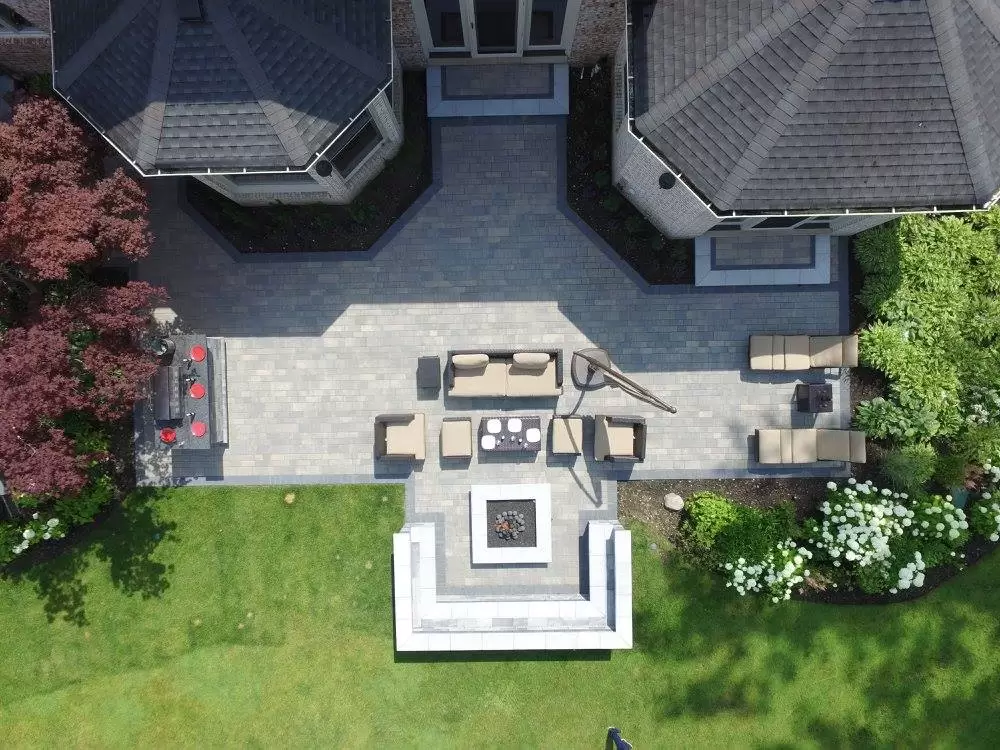
A paver patio is one of those projects homeowners think about for years before they finally commit. And once you’re ready, one of the first questions that comes up is timing. When should the paver patio installation happen? In a lot of the country the answer is a shrug, but here in the Chicago suburbs the seasons shape the project more than you might expect. Our winters are long, our soil moves with the freeze and thaw, and the calendar has a real effect on both the installation itself and how soon you can get on a good contractor’s schedule.
The short answer is that a paver patio can be built successfully throughout most of the year, from spring through late fall. But each season comes with trade-offs, and there’s usually a smart time to plan and a smart time to break ground. Here’s how it all shakes out for homeowners in Des Plaines, IL and the surrounding north and northwest suburbs.
Does the season really matter for a paver patio?
It does, and the reason has less to do with the pavers and more to do with the ground underneath them. The Chicago area sits on heavy clay soil, and our winters push the frost line deep. When the ground freezes and thaws, it expands and contracts, and anything sitting on top of it moves too. That’s why a proper patio isn’t just brick laid on dirt. It’s a compacted base of crushed stone, carefully graded for drainage, built to handle years of that movement.
All of that base work happens in the soil, so conditions in the ground matter. When the earth is frozen solid in the middle of a Chicago January, excavation is slow, difficult, and often not worth doing. When the ground is soft and workable, the crew can dig, grade, and compact the way the project deserves. The season doesn’t change what a good patio looks like. It changes how smoothly and how soon we can build it.
Spring: The Season Everyone Thinks of First
Spring is the season most homeowners picture when they imagine their new patio. The snow is gone, the yard is waking up, and the idea of a fresh outdoor space feels right. The ground has thawed, temperatures are comfortable for the crew, and finishing in spring means you get the full summer to enjoy the space.
The catch is that everyone else has the same idea at the same time. Spring is when calls come in fastest, which means the best crews book up quickly. Early spring can also be wet. A rainy stretch turns clay soil into mud, and saturated ground has to be managed carefully during excavation and base prep. None of that is a dealbreaker. It just means the homeowners who reach out early tend to get the dates they want, while those who wait until April or May may find themselves further back in line.
Summer: Peak Season and Peak Demand
Summer is the busiest stretch of the year for patio work, and for good reason. The weather is dependable, the days are long, and it’s the season people most want to be outside. If you’re picturing evenings around a fire pit or weekend barbecues on the new patio, summer delivers.
The trade-off is demand. By the time summer arrives, schedules are full, and the wait for a start date can stretch out. Extreme heat can also slow a crew down on the hottest days, though that rarely affects the finished result. If summer is your target, the key is simple; get your project on the calendar well before the season starts, not after it’s already here.
Fall: Often the Sweet Spot in the Chicago Suburbs
Fall tends to be the quiet favorite among people who know paving. The heavy spring and summer rush has passed, the air is cooler, and the ground is still soft enough to work before the first hard freeze. Cooler temperatures are easier on an installation crew than mid-summer heat, and the drier conditions many autumns bring make for cleaner excavation and base work.
There’s a planning advantage too. A patio finished in fall is ready and waiting the moment the weather warms up next year. You skip the spring rush entirely and step straight into the season with a completed space. The window does close as winter approaches, so fall projects work best when they’re scheduled with enough runway to finish before the ground locks up. For homeowners who want great conditions and shorter wait times, early to mid-fall is hard to beat.
Winter: The Season to Plan, Not to Dig
Once the ground freezes, excavation and base work become impractical in our climate, so winter is generally not the time for construction. But it may be the smartest time to start the process. Winter is when our schedule is most open, which means you can sit down with our professionals, talk through your vision, choose your Unilock pavers or natural stone, and see your patio come to life in a full 3D design rendering, all without the time pressure of peak season.
Homeowners who use the winter months to plan and lock in a date are the ones who end up first on the calendar when the ground thaws. Instead of joining the spring rush, they’ve already made every decision and simply wait for the crew to arrive. If a new patio is on your list for next year, winter is the perfect time to get the groundwork done on paper.
Why the Base Matters More Than the Calendar
It’s worth repeating, because it’s the thing that separates a patio that lasts from one that shifts and settles after a couple of winters. The season affects scheduling and comfort, but the quality of the base is what determines how your patio holds up in our freeze-thaw climate. A patio installed in perfect June weather on a poor base will fail faster than one installed in cooler fall conditions on a base that’s excavated to the right depth, compacted properly, and graded for drainage.
No matter the season, it is best to call the professionals at Pavestone to manage the installation of your brick paver patio. Our team handles excavation, builds a solid base, sets the proper slope so water drains away from your home, and installs interlocking pavers that lock together into a surface strong enough to handle furniture, foot traffic, and years of Chicago weather. We’re a Unilock and Rochester Authorized Contractor and an ICPI-certified installer, and we back our brick paving, retaining wall, and step work with a five-year unconditional guarantee on labor. The right time of year helps. The right base is what makes it last.
So when should you book your patio installation?
If you want the fastest possible enjoyment, aim to have the work done in spring or early summer, and reach out over the winter to secure your spot. If you’d rather avoid the crowds and take advantage of great working conditions, fall is an excellent choice. And if you’re just starting to dream about the space, there’s no wrong time to begin the design conversation. The planning can happen in any season, and the earlier it starts, the more control you have over when the shovels hit the ground.
The one thing we’d steer you away from is waiting until you’re ready to start before you call. The best dates fill up months ahead, so the homeowners who plan early are the ones who get the timeline they want.
Ready to plan your paver patio? No matter the season, our family-owned team has been designing and installing patios for homeowners across Des Plaines and the north and northwest Chicago suburbs for more than 24 years. Learn more about our paver patio installation services, or call Pavestone Brick Paving at 847-895-7004 for a free estimate and a 3D design of your new outdoor space.
Paver Patio Installation FAQs
What is the best time of year to install a paver patio in the Chicago suburbs?
Paver patios can be installed from spring through late fall in the Chicago area. Fall is often the sweet spot thanks to cooler temperatures, drier conditions, and shorter wait times, while spring and early summer are ideal if you want the patio ready for the warm months. The most important step is planning early, since the best dates fill up months in advance.
Can a paver patio be installed in winter in Illinois?
Once the ground freezes, excavation and base work become impractical, so winter is generally not the season for construction in our climate. However, winter is an excellent time to plan your project, choose your pavers, and finalize your design so your installation is scheduled and ready to go as soon as the ground thaws.
How far in advance should I book my paver patio installation?
Because spring and summer are the busiest seasons, we recommend reaching out several months ahead, ideally over the winter or early spring, to secure the start date you want. Homeowners who plan early have the most flexibility and get first spots on the schedule when the season opens.
Does rain affect paver patio installation?
Heavy rain can saturate the clay soil common in the Chicago suburbs, which has to be managed carefully during excavation and base preparation. A short delay for weather is normal and helps ensure the base is built correctly. Our professionals plan around conditions so your patio is installed on a solid, well-drained foundation.
How long does a paver patio take to install?
A small, basic patio without added features typically takes about one week. Larger patios with more complex designs and features such as retaining walls, steps, and pillars may require additional time. We’ll provide a clear timeline for your specific project before work begins.